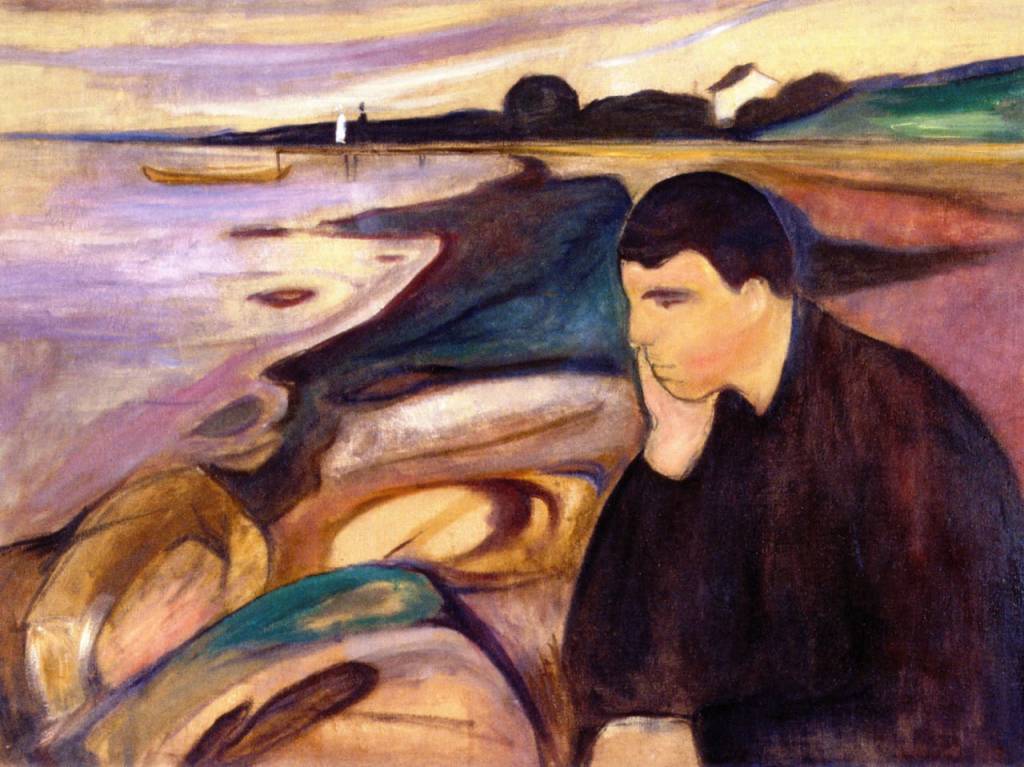
Meaning is a word that occupies an odd place in human mind. We do not mostly think about it, but when we do, it lands us in an anxious spot. We have been mostly grown up from childhood on the belief that following our passion is what gives meaning to our lives, though when we enter the confines of adulthood, the necessity of livelihood takes our passion to the brink, and then when we are reminded of meaning, we are awashed by the sea of passions that we did not follow.
Philosophers, writers, psychologists in every century try to provide for the answers of this everlasting question. For ancient Greek philosopher Plato, the meaning of life was in the word ‘knowledge’. To attain knowledge was to know ourselves, and since we love ourselves more than others do, it was considered to provide meaning. Yet, it is clear by the numerous examples provided by social media every day that we don’t love ourselves more than others, we love the image of ours in the viewers’ eyes, be it may by power, attraction, or muscles. This causes the rupture of meaning in most individuals when they sit to gain wisdom, because wisdom’s path is long, gruesome and does not form an instant pleasant image in eyes of other individuals.
“There is nothing ultimately going to change. I am going to die. The world is going to die. We are just a speck of dust in a vast expanding universe,” is the generally augmented response in scientifically drowned individual.
And the religiously inclined individual, though does not has the same view, but their meaning on Earth, for human-kind is carnal. Earth is a cycle to break, a suffering to end, a path to build for heaven.
The response of meaning-lessness of all earthly, humanly creed was also propounded by the ridiculous man in Fyodor Dostoyevsky’s short story, the dream of a ridiculous man: “I began to feel with all my being that there was nothing existing. At first I fancied that many things had existed in past, but afterwards I guessed that there never had been anything in the past either, but that it only had seemed so for some reason. Little by little I guessed that there would be nothing in the future either. Then I left off being angry with people and almost ceased to notice them.
Indeed this showed itself in the pettiest trifles: I used, for instance, to knock against people in the street. And not so much from being lost in thought: what had I to think about? I had almost given up thinking by that time; nothing mattered to me. If atleast I had solved my problems! Oh, I had not settled one of them, and how many there were! But I gave up caring about anything, and all the problems disappeared.”
What our generation wants is the flux of everlasting happiness, the feeling of constant exhilaration – a feeling which was achieved by our ancestors when they did accomplish their pursuits, whether that involved constructing a house, publishing a book, making a piece of furniture, or catching the evening’s fish. In our technology omnipresent world, the flurry of likes, hits, views help us attain the same exhilaration without an actual betterment of circumstances.
We want to be artists, but are not ready to hold pencils at all time, for that would make us look odd. We want to be next Einsteins, but are not ready to sweat for it. We want to be business leaders, but are not ready to swim in annual reports. This ultimately doesn’t only take the sense of meaning away but also is a recipe to destroy individuality. More and more people are joining as employees in big technology firms, having their dream to work for these companies. This connects them to a group of socially conformed elite herds, causing them to not stand alone in presence of themselves.
As Yevgeny Zamyatin, the Russian writer, and a staunch critic of authority wrote:
“If we have no heretics we must invent them, for heresy is essential to health and growth.”
The feeling of meaning exists in hard work only, a hard work in which one works for oneself, even if that depraves them of a few hours of sleep. The hindi writer, Munsi Premchand, wrote:
“I am a laborer. The day on which I don’t write, I don’t have any right to eat food.”
This sense of burning for yourself has been eroded by the modern world, in which, not conforming to the medical modern standards would mean a health risk. An eight hour sleep is must, not going in the sun is better, and remaining locked in home is better than dying because of what one wants to do for himself. It is akin to sheep being kept in a barn, and being directed what is good for them at every turn.
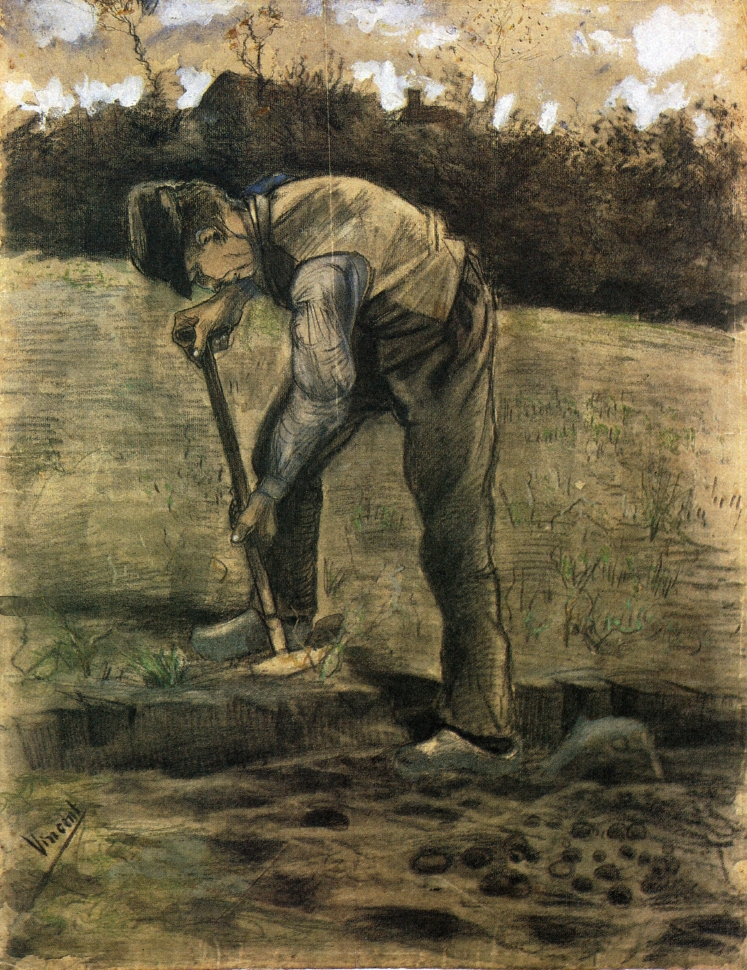
The gumption for working hard for oneself is increasingly being erased in our modern world, especially if it is an artistic endeavor. The creative ones are not considered normal, they are termed as ‘nerds,’ and ‘time wasters.’
To achieve meaning is to drown ourselves in things which are challenging and which brings out individuality in us. Being an individual is far greater an arduous endeavor than being an AI developer, or a philosopher.
Warren Buffett once said, taking out a stack of papers: “Read 500 pages like these every day. That’s how knowledge works – it builds up like compound interest. All of you could do it, but most, most of you won’t.” But reading for oneself, reading which may not be useful is considered a foolishness in our times.
Like Warren Buffett, Dr. Viktor Frankl, the Austrian psychiatrist and holocaust survivor, argued that today’s youth is not over-demanded but are under-demanded. To demand ourselves for our wishes is the meaning, which we long for.
Life is not outside enjoying itself, but at our doorsteps, asking, “What are your plans for ‘yourself’ today, to add to the bits of compounding?”
As Dr. Viktor Frankl said:
“It’s a Copernican switch. We are not asking life. Life is asking us – What is the meaning?”
 The Heavenly Cap